
The Art of “Surprise and Delight” Throughout a Capital Campaign

Five years ago, Capital Campaign Pro co-founders Amy Eisenstein and Andrea Kihlstedt tapped me to become the company’s first Chief Happiness Officer.
Yes, that is my actual title.
They created the position because they wanted to build a company and a community of clients and partners infused with, well, happiness. And what better way to signal that happiness matters than to put someone officially in charge of it?
Seeing People is Key to Acknowledging and Appreciating Them
Over the years, I’ve built out what being Chief Happiness Officer means here at Capital Campaign Pro. Much of it comes down to something pretty simple — seeing people. We celebrate colleagues, clients, and partners in moments big and small. We notice milestones. We acknowledge hard things. We look for opportunities to make someone laugh, feel appreciated, or know that someone is paying attention.
And at the heart of this work is a simple goal: to surprise and delight people.
Sometimes Surprise and Delight Looks Like… a Poem
At our annual company retreat this year, I celebrated my five-year anniversary as Chief Happiness Officer.
Together with my fellow members of the Capital Campaign Pro “Happiness Department,” I’m usually one of the people charged with noticing and celebrating others. And we do a lot of that at our annual retreat. We give awards to our advisors. We celebrate anniversaries and milestones. We look for opportunities to recognize the people who make our company what it is.
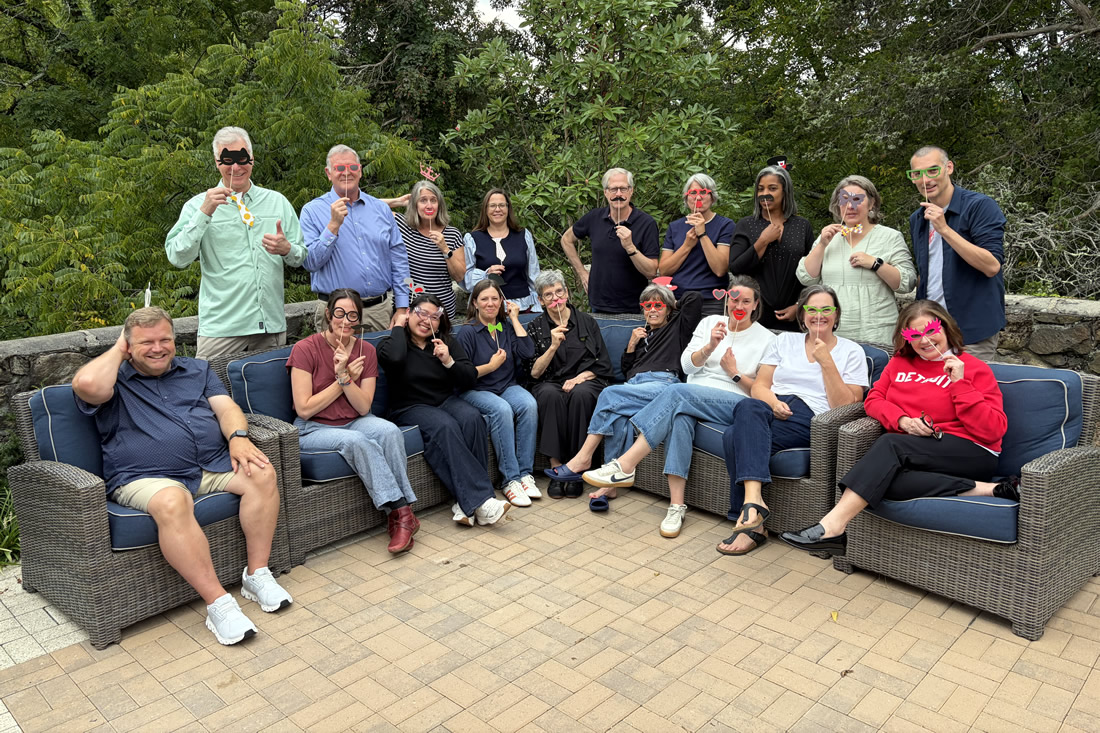
So imagine my surprise at our first night dinner when our CEO, Amy Eisenstein, called me to the front of the room. Unbeknownst to me, Amy and the entire team had conspired to celebrate my five-year anniversary with a poem they had written together.
Amy began by reading the first verse, which reflected something about our relationship and the years we’ve worked together. Then, as soon as Amy finished, someone else stood up and read the next verse, this one reflecting a moment the two of us had shared. Then another person stood. And another.
A Personal Touch Makes All the Difference
On and on it went until everyone in the room had read a verse. Each one was different, and each reflected something personal between me and the person reading it: an inside joke, a shared experience, a funny moment, or a memory that probably wouldn’t have meant much to anyone outside our team but meant a great deal to me.
It was funny. It was unexpected. And it was deeply personal.
But what struck me most was the wonderful reversal of it all. I spend a lot of my time thinking about how we can make other people feel seen. And here was an entire room full of people showing me that they had been seeing me, too.
Every verse communicated, in its own way: We know you. We remember this. We were paying attention.
And as I sat there listening, I realized I was experiencing exactly the kind of surprise and delight we so often encourage our clients to create for their donors and volunteers.
Fundraising Stewardship: What Makes People Feel Appreciated?
In fundraising, we tend to think about stewardship in fairly predictable ways:
- Send the thank-you letter.
- Make the thank-you call.
- Put the donor’s name in the annual report.
- Invite them to an event.
- Send the impact report.
All of those things are worthwhile and important. But they can also become a predictable checklist. And the trouble with a predictable checklist is that the recipient can often feel the checklist happening.
Attempting to “surprise and delight” people, however, invites us to think a bit differently.
How to Make Someone Feel Genuinely Special
Instead of asking, “What is our stewardship plan for this donor?” try asking, “What would surprise and delight this particular person? What would make them feel genuinely seen?” That is a very different question.
- Maybe a donor mentioned during a conversation that she loves a particular author, and six months later you come across an article about that author and you send her the article with a handwritten note.
- Maybe a volunteer casually mentions a favorite local bakery, and you bring a box of goodies from said bakery to the next committee meeting.
- Maybe a campaign chair has just led your organization through an exhausting six months, and instead of another formal recognition event, the staff sends her a funny photo and a note about the moment they knew the campaign was going to succeed.
- Maybe a volunteer always arrives early to help set up, and one day you have their favorite coffee waiting when they walk in the door.
None of these things are expensive. In fact, I’d argue that the best examples usually aren’t. The magic isn’t in the thing; the magic is in the noticing.
Pay Attention to the Small Stuff; the Human Stuff
The good news is that you don’t need a Chief Happiness Officer to start surprising and delighting your donors and volunteers. You just need to start looking for opportunities to do so.
When someone on your team learns something about a donor or volunteer, capture it. Not just their giving capacity or their relationship to another prospect — capture the human stuff, too:
- What makes them laugh?
- What are they proud of?
- What are they worried about?
- What did they mention in passing?
- What role in the campaign has been particularly meaningful to them? What happened in their life this year?
- What are they passionate about?
Then give your team permission to do something fun with that information.
Stewardship Is a Relationship, Not a System
Good fundraising systems matter. Of course you should have acknowledgment procedures, stewardship calendars, contact reports, and plans for staying connected with your donors. But systems should support relationships, not replace them.
The organizations that are exceptional at stewardship understand the difference. They don’t simply make donors feel thanked. They make donors and volunteers feel known.
That’s a much higher bar. And it requires curiosity, attention, humor, generosity, and a willingness to get creative.
Surprise and Delight Via Small “You Matter” Moments
Five years into my tenure as Chief Happiness Officer, I’m more convinced than ever that happiness isn’t created primarily through grand gestures. It’s built through small moments that communicate: I see you. I know you. You matter here.
- Sometimes that’s a handwritten note.
- Sometimes it’s remembering to call on an important day.
- Sometimes it’s a poem filled with memories and inside jokes that could only have been written for you.
While the specifics will vary, the principle will not. Pay attention. See people. And whenever you can, do your best to surprise and delight them.
Explore Free Upcoming Ready to Raise Sessions
Check out Capital Campaign Pro’s free weekly Ready to Raise sessions, offering nonprofit leaders expert guidance, practical strategies, and a live Q&A.




Leave a Comment