
Capital Campaign Feasibility Study: The Ultimate Guide
Well-executed feasibility studies give nonprofit leaders the data-informed confidence they need to lead successful campaigns.
Capital campaign feasibility studies offer organizations insight into how much they can realistically expect to raise over the course of their campaign. This helps nonprofit leaders set appropriate funding goals and plan for alternative funding sources if necessary.
Feasibility studies are also an opportunity to strategically engage supporters before asking them to donate. Therefore, skipping this crucial step in the campaign planning process is foolish and irresponsible.
There’s a great deal to know about capital campaign feasibility studies. We’ll jump-start your understanding of this important topic in the sections below:
- What Is A Capital Campaign Feasibility Study?
- Why You Should Conduct a Feasibility Study
- Pros and Cons of the Old Model
- Benefits of the New Model: Guided Feasibility Studies
- How to Prepare Your Nonprofit for a Feasibility Study
- Hiring the Right Consultant for Your Feasibility Study
Read on to learn the ins and outs of conducting a feasibility study.
Find Out if You’re Ready for a Campaign
Download any of our four free assessment tools to help you determine whether you are truly campaign-ready.

What is a Capital Campaign Feasibility Study?
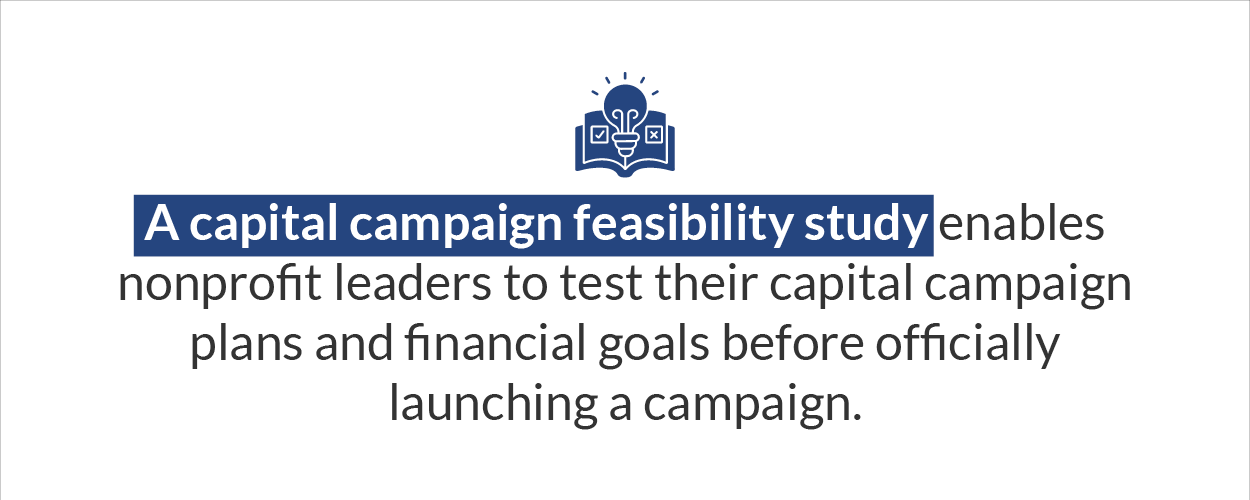
A capital campaign feasibility study enables nonprofit leaders to test their capital campaign plans and financial goals before officially launching a campaign.
Feasibility studies involve asking your nonprofit’s largest donors and other community leaders for their advice and opinions on your campaign before getting started. Their collective advice will help determine whether your plans are sound, your case for support is compelling, and your financial goals are realistic and feasible.
Think of feasibility studies as “campaign planning studies” as they help nonprofit leaders develop strong campaign plans by determining what goals and strategies are feasible.
Are there situations where a nonprofit doesn’t need a feasibility study?
You might be concerned about conducting a feasibility study out of fear that the results will be disappointing.
Or you might need to do a campaign so badly that you expect you’re going to launch one regardless of a feasibility study’s results, so why spend the time and resources on a study?
Ultimately, a well-designed feasibility study helps you collect important data and engage key donors, which will be crucial to planning and implementing a successful campaign.

Why You Should Conduct a Feasibility Study
In this section, we’ll examine five reasons to complete a feasibility study.
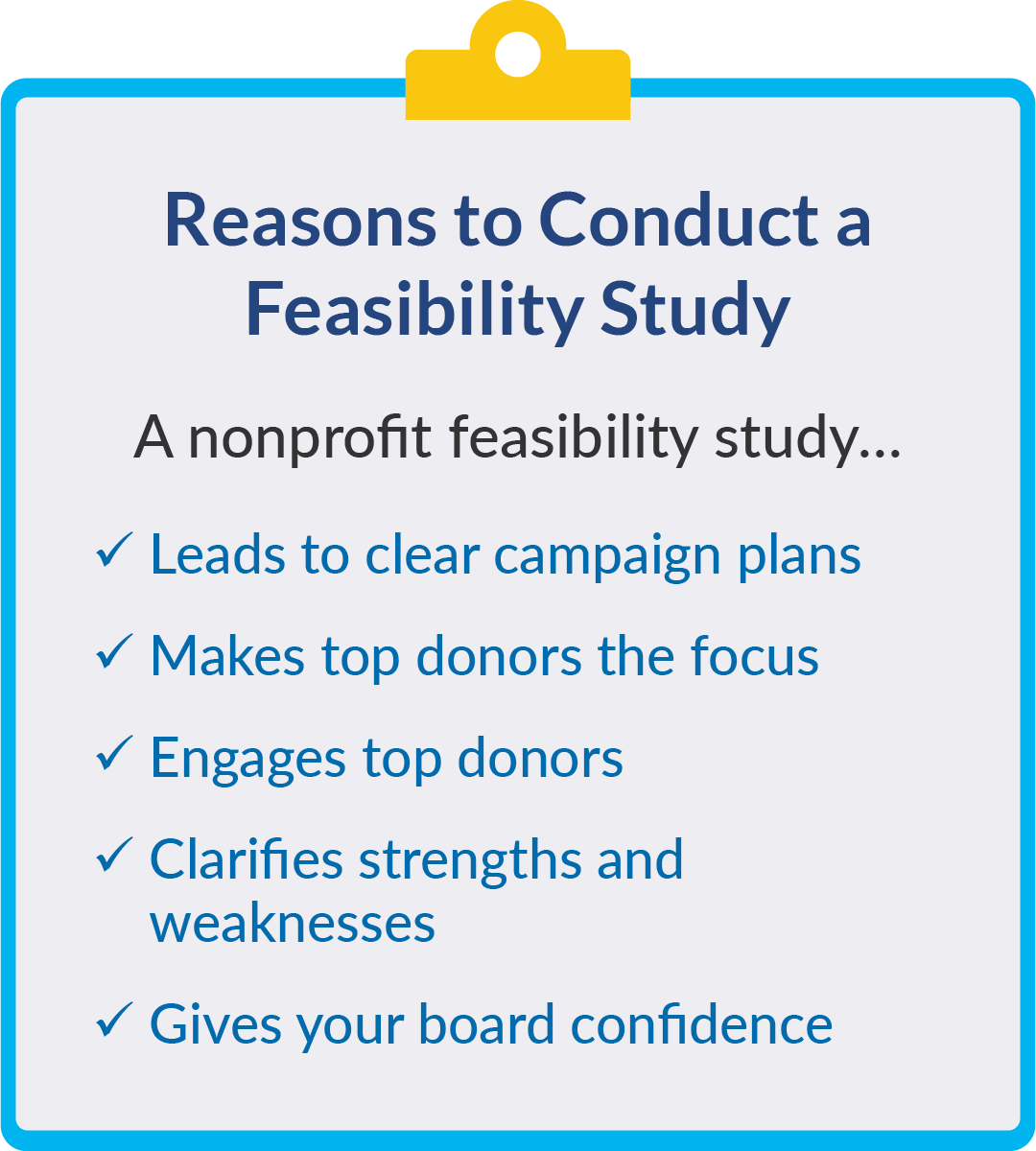
1. A Nonprofit Feasibility Study Leads to Clear Campaign Plans
Donors don’t respond well to vague plans. A feasibility study forces you and your team to come up with clear plans.
For example, you can’t go to donors and say:
“We’d like to expand, but we don’t know where the new building will be, how big it will be, whether it needs renovating, or how much it will cost. What do you think?”
Donors can only give vague answers to vague plans. In contrast, the more specific your plans are, the more specific donors’ feedback will be.
This doesn’t mean you need to have every detail worked out at this early stage, and your plans are likely to change over time. However, it’s important to approach donors with clear thinking and as many details as possible.
2. A Nonprofit Feasibility Study Forces the Focus on Top Donors
Campaigns are successful when top donors make lead gifts.
Since it is not possible or realistic to interview hundreds of donors, the feasibility study process forces you to identify and engage with your top prospective donors. By interviewing a handful of donors who have the capacity to make lead gifts, you can gain insights into your campaign’s viability.
3. A Nonprofit Feasibility Study Engages Top Donors
Your top donors will feel like insiders when you take the time to meet with them, explain your plans, and ask for feedback. By including them in feasibility conversations, you’re giving them an opportunity to engage early in the planning process alongside other leaders. This can lead to increased support down the line.
4. A Nonprofit Feasibility Study Clarifies Strengths and Weaknesses
Engaging outsiders in your planning process helps you identify strengths and weaknesses that you might not otherwise see.
If more than one person has the same concern, you’re more likely to address it during your pre-campaign planning process. You may also identify a strength that you hadn’t considered when an outside perspective brings it into focus.
5. A Nonprofit Feasibility Study Gives Your Board Confidence
Most board members don’t really understand what goes into a capital campaign or what makes one successful. As such, they likely don’t have a clear understanding of how much your fundraising team can raise, nor what your capital campaign’s budget should be.
Feasibility studies give your board confidence that top donors will support your efforts. It’s much easier to vote in favor of moving ahead with a campaign after dozens of your top giving prospects have been consulted and have given the green light to move forward.

Pros and Cons of the Old Model
Historically, feasibility studies have been conducted by experienced capital campaign consultants who design the study, conduct confidential donor interviews, develop a report, and present the results with recommendations to your board.
During conversations with your nonprofit’s largest donors, the consultant presents preliminary campaign plans and collects feedback confidentially and anonymously.
This method often leaves nonprofit leaders confused and frustrated, as they don’t know which donors said what during interviews. If donors have questions or concerns, no one at your nonprofit can follow up due to the confidential nature of the interview process. Additionally, you won’t know how much a specific donor indicated they might give. As a result, a consultant’s recommendations often lack transparency.
This model doesn’t help build relationships between donors and the leaders of your nonprofit, nor help nonprofit leaders have strategic conversations with donors.
Fortunately, there is a better way.

Benefits of the New Model: Guided Feasibility Studies
At Capital Campaign Pro, we developed a feasibility study model that focuses on building transparent and honest relationships between donors and nonprofit leaders: the Guided Feasibility Study. Through this method, nonprofit leaders conduct the donor interviews, allowing them to solidify connections and still gain the benefits of a consultant’s expertise, data collection, and analysis.
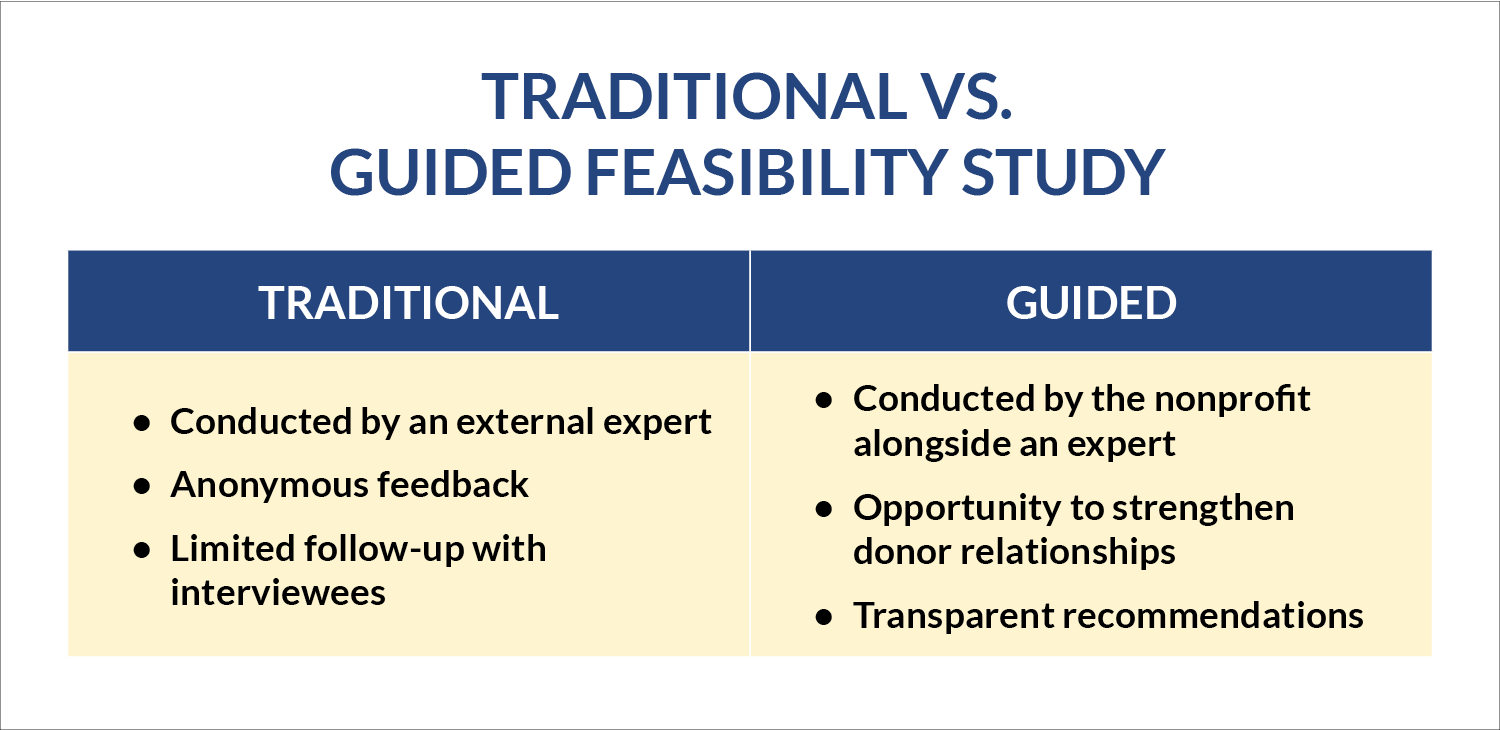
In the new, guided model, an experienced consultant will help your team:
- Develop the strategy
- Outline a plan
- Write a strong case for support
- Develop a discussion guide
- Select interviewees
- Develop questions
- Train interviewers
- Debrief interviews
- Provide data collection tools
- Conduct analysis
- Make recommendations
- Report to the board
The feasibility study interviews provide your leaders (as opposed to an outside consultant) with a valuable opportunity to build and strengthen relationships with major donors early in the campaign planning process.
Will Donors Really Be Honest with Nonprofit Leaders?
Some nonprofits may worry that in the new model, donors won’t provide honest opinions. Many consultants who use the old model raise this as an issue in favor of a more confidential process.
However, after doing more than a hundred Guided Feasibility Studies where nonprofit leaders interview their own donors, we can confidently say that you don’t need to worry about donors being open and honest with your nonprofit leaders. In fact, we’ve found that donors are more likely to want to share feedback directly with nonprofit leaders. This method actually allows you to follow up with donors, building trust and cementing existing relationships.

How to Prepare Your Nonprofit for a Feasibility Study
Before you hire a consultant, set your nonprofit up for a streamlined, organized feasibility study by following these steps:
1. Determine Your Preliminary Campaign Objectives
Clarify the project for which your campaign will raise money. Some examples include new building construction or renovation/construction costs, new programs/services, scholarship funds, technology, facilities maintenance costs, fundraising expenses, additional staff, endowments, etc.
Feasibility studies don’t tell you how much money your organization can raise in a vacuum; rather, they test how much money you can raise for a specific project or set of initiatives.
2. Engage your Board in Getting Ready for a Campaign
Before hiring a consultant, make sure your board is ready for a campaign (or at least ready to take the next step). This means they’re aware of the project, excited about it, and understand the associated costs. A consultant can certainly help with this, but you can hit the ground running on campaign work if it’s already in place.
3. Develop a Preliminary Campaign Fundraising Goal
Attach dollar estimates to your campaign objectives so that you can gauge how much you need to raise. This is your initial working goal, which will be tested in the feasibility study.

Hiring the Right Consultant for Your Feasibility Study
Campaign consultants provide a wide range of services and offer comprehensive expertise. You want an experienced campaign consultant with a track record of success. They should have consulted on at least five campaigns from start to finish.
Follow these steps to hire the right consultant for your organization:
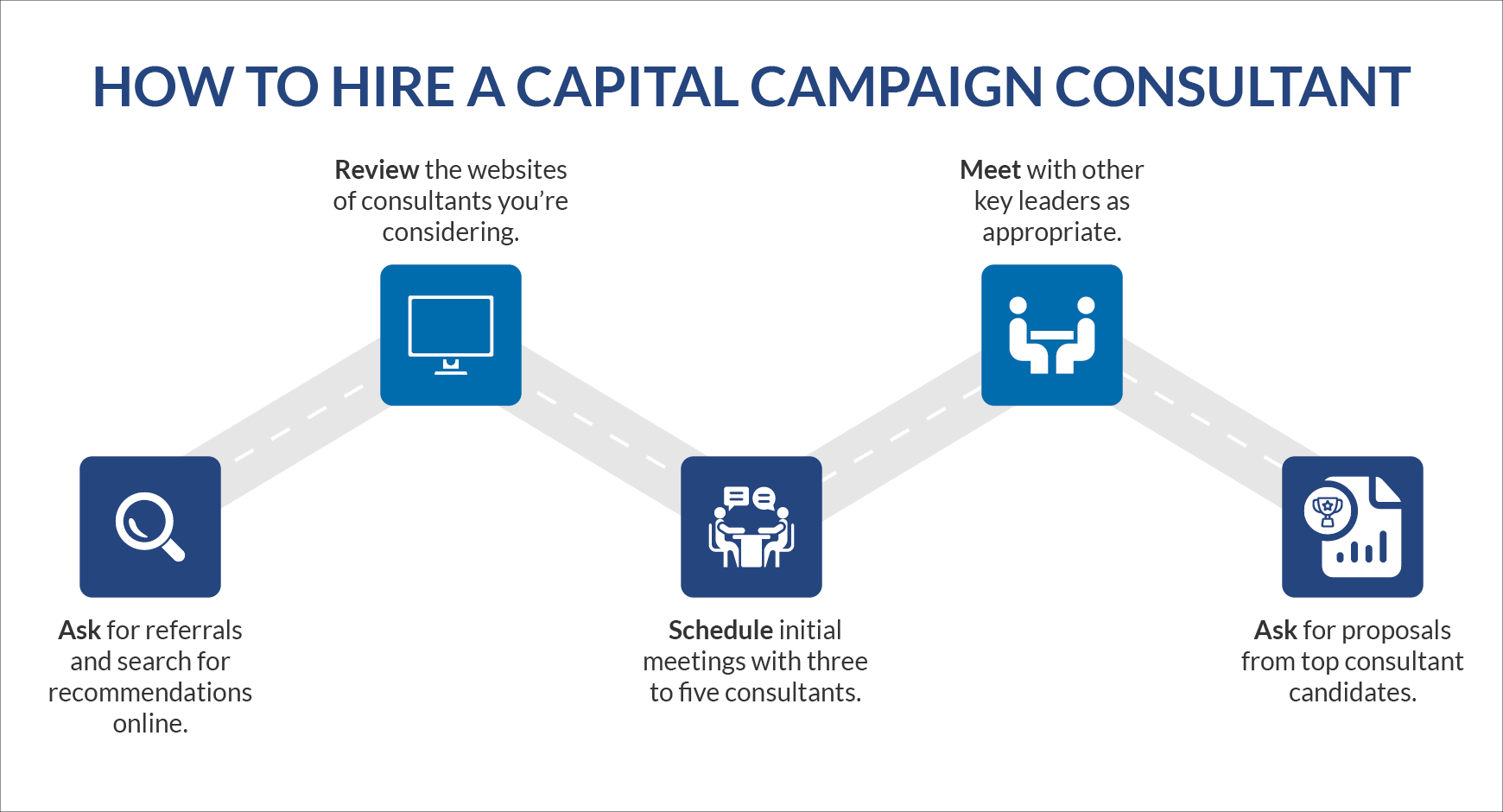
- Ask for referrals and search for recommendations online.
- Review the websites of consultants you’re considering.
- Schedule initial meetings with three to five consultants. Be prepared to share details about your campaign, your fundraising strategy, your team, and what you need.
- Meet with other key leaders as appropriate.
- Ask for proposals from top consultant candidates.
You’ll notice there’s nothing mentioned above about Requests for Proposals (RFPs). Successful, busy consultants don’t respond to RFPs, so don’t waste your time creating them.
We hope you’ll consider Capital Campaign Pro as one of the top consulting companies you evaluate for your feasibility study and your campaign. We have a wide range of services and offerings that can help your nonprofit complete an insightful feasibility study and run a successful capital campaign.
Are you Ready for a Guided Feasibility Study?
If your organization is preparing for a capital campaign, a feasibility study will be an important part of your planning process. Done well, it can help you plan a campaign that is likely to succeed while providing an opportunity to engage your top donors in the process.
A Guided Feasibility Study with Capital Campaign Pro allows you to build relationships with donors with the aid of an experienced capital campaign expert. And even more important, a Guided Feasibility Study gives your board members the confidence they need to accept your fundraising team’s planning recommendations and move forward with your capital campaign.
For more information on what Capital Campaign Pro’s Guided Feasibility Study looks like, check out this video:
Additional Campaign Resources
To learn more about conducting a successful capital campaign, explore the following additional resources:
- Capital Campaigns 101: Ultimate Guide for Beginners
- Capital Campaign Case for Support: How to Write Your Own
- How to Create a Capital Campaign Brochure: Our Top 4 Tips
We’d love to learn about your campaign and your needs. No obligation — simply click below:
Get the support you need to succeed.
With our approach, you get the support, expertise, and guidance you need — plus all the tools and materials — to make your campaign a success.




Leave a Comment