
Why Pre-Campaign Guided Feasibility Studies Lead to Success
Successful capital campaigns require trust. These major campaigns ask donors, volunteers, and leaders to believe not only in a vision but in the people stewarding it. How an organization presents its case before the first ask—how it listens, prepares, and engages with its community—sets the tone for everything that follows.
As a result, some of the most important aspects of running a capital campaign actually happen before the campaign even begins. The pre-planning and feasibility study phases are vital to building donor relationships and ensuring internal readiness before embarking on the largest fundraiser your nonprofit will likely ever run.
Here, we’ll answer key questions about this important stage of the campaign planning process.
Why Does Pre-Campaign Planning Matter?
Pre-campaign planning is the crucial phase where vague goals are translated into a strategy, laying the groundwork for the rest of the campaign. It’s where an organization:

- Creates a project plan
- Sets concrete objectives and goals
- Develops a clear, compelling case for support
- Defines the anticipated financial scope of the work through a realistic campaign budget and gift range chart
- Qualifies and prioritizes prospective donors
When properly executed, this phase ensures the campaign goal is achievable and will adequately fund the designated project. Pre-campaign planning brings coherence to your campaign so that every conversation, ask, and decision flows from a shared understanding of purpose, scale, and strategy rather than assumptions.
Ask yourself: Have we clarified our vision, vetted our budget, and aligned our team before we talk to donors about a campaign? Check your budget with our calculator:
What Does Campaign Readiness Mean?
Organizations should never guess, rush, or assume they’re ready when embarking on a capital campaign. True campaign readiness involves your nonprofit’s finances and internal capacity, but it also factors in your relationships. In fact, in our readiness checklist, nearly half the questions are about donor relationships:

Too often, feasibility studies are framed as information-gathering exercises to determine whether a campaign goal is achievable. In practice, they are relationship-building processes. When staff and volunteer leaders engage prospective donors in these conversations, feasibility becomes less about validation and more about creating partnerships.
The presence of staff in feasibility interviews changes the emotional tone of the conversation. Donors speak more personally, ask deeper questions, and begin to imagine themselves as part of what’s coming next. Staff create continuity and can start the stewardship process immediately.
Key takeaway: Campaign readiness is about more than just how much your organization can raise. Focus on developing donors’ relationships with your nonprofit before the campaign goal is ever announced.
Why Do Guided Feasibility Studies Build Trust?
Feasibility studies bring donors in early during the campaign planning process, building trust and deepening relationships long before the first major gift is ever requested. That’s why pre-campaign planning matters so much, and why who leads feasibility conversations matters even more.
At Capital Campaign Pro, we’ve formalized this philosophy through what we call a Guided Feasibility Study. Rather than outsourcing donor conversations to a third-party consultant, this approach keeps organizational leadership at the center of the work.
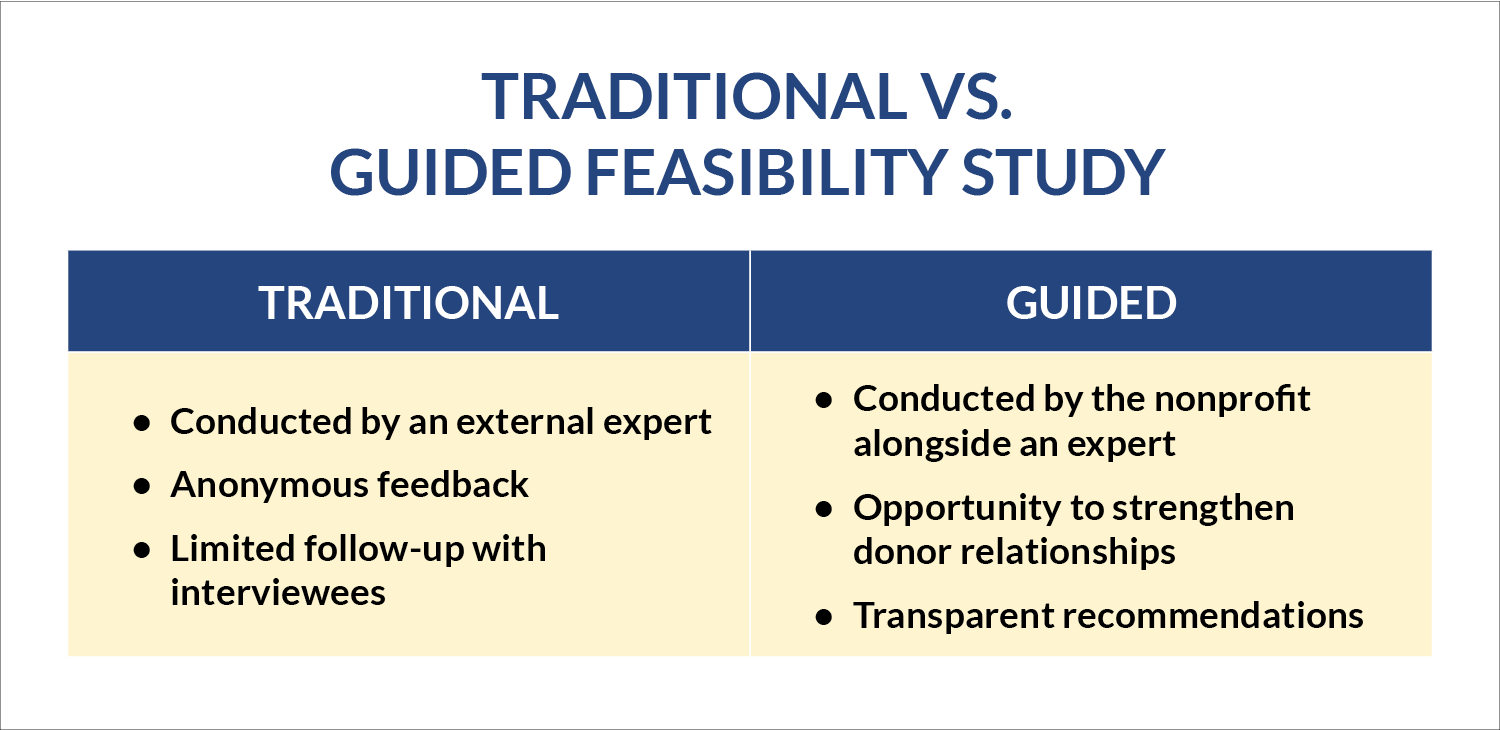
Traditional feasibility studies:
- Are conducted entirely by external experts, closing conversations off to nonprofit staff.
- Result in anonymous feedback.
- Prevent nonprofits from being able to follow up with specific interviewees to answer their questions or alleviate their concerns.
In contrast, guided feasibility studies:
- Involve leaders conducting the interviews themselves, while consultants provide the structure and support—training staff, developing strategy and discussion guides, identifying themes, analyzing findings, and helping present clear recommendations.
- Strengthen donor relationships from the very beginning as staff engage with stakeholders.
- Link all feedback to specific donors, empowering nonprofits to respond to their concerns directly in future conversations.
The result is a process that preserves transparency, deepens insight, and ensures internal teams hear key stakeholders’ feedback firsthand. Just as importantly, it allows feasibility to double as early campaign momentum, strengthening relationships and confidence long before you announce your goals.
Authenticity Accelerates Relationship Building
When staff members, rather than consultants, sit across the table from donors during feasibility interviews, something fundamentally different happens. Trust accelerates, confidence grows on both sides, and the campaign begins to take shape not as a financial exercise but as a shared commitment rooted in relationship and shared values.
This approach pushes back against the longstanding belief that donors will hold back their real opinions and not tell the whole truth to staff. Instead, we’ve found that many donors are more candid when speaking directly with the leaders who will ultimately steward their investments.
Ask yourself: Are our feasibility conversations designed to build long-term trust, or just to produce a short-term report about our campaign’s financial goals?
Why are Feasibility Interviews Important?
One of the most overlooked truths in fundraising is that the feasibility interview is often a donor’s first campaign experience. How a donor feels about those early conversations will linger long after the study is complete.
When feasibility interviews are led by staff (and guided by consultants), donors experience the organization as prepared, curious, and respectful. They encounter leaders who are willing to listen, sit with hard questions, and adapt, not just sell a pre-packaged plan. That experience lays the emotional groundwork for future engagement and generosity.
Confidence does not come from reading a summary in a report. It comes from remembering a donor’s tone, a pause in the conversation, the energy behind a gift range indication, or a moment of shared understanding. These lived experiences shape how staff approach subsequent conversations, including solicitation.
Key takeaway: The feasibility interview is not a neutral data collection step but the first step in building vital campaign connections.
How Should Nonprofits Work with Capital Campaign Consultants?
While we advocate for staff involvement in feasibility studies, consultants are still essential to the process. Consultants are most valuable when they’re structuring interviews, coaching staff, and helping interpret interview results. In turn, the actual donor relationships are built and owned by the nonprofit staff who will steward these prospects during the campaign and long after it finishes.
With this approach, consultants can help:
- Design the study to determine what it should focus on, what types of stakeholders should be approached, and who should accompany the consultant on interviews.
- Develop the interview guide to create questions that will lead to insightful, actionable responses while also building donor trust and interest.
- Identify prospects to include who will give the most valuable feedback and will also be key donor prospects moving forward.
- Train staff and volunteers to conduct open, honest, and mission-centered conversations.
- Interpret interview results and help synthesize those findings into themes, implications, and clear recommendations for campaign readiness, goal setting, and case refinement.
What don’t consultants do? Replace the nonprofit in the relationship-building process. If you encounter a consultant who promises to “bring you campaign donors,” beware. Donor relationships belong to the mission and the organization, not to any intermediary.
Ask yourself: Are we hiring a consultant to build our campaign, or to build our internal capacity to deepen relationships and lead future campaigns?
Where Capital Campaigns Really Begin
Campaigns rarely falter because of ambition. They falter because assumptions go untested, feedback is not sought, and early discomfort goes unspoken. Guided feasibility interviews surface concerns while there’s still space to respond thoughtfully and collaboratively, strengthening both the plan and the relationships on which it depends.
The capital campaign story does not begin with an ask. It begins with authentic conversations led by the people who will carry the relationship forward. That’s what makes pre-campaign planning not just strategic, but transformative.
Get the support you need to succeed.
With our approach, you get the support, expertise, and guidance you need — plus all the tools and materials — to make your campaign a success.



Leave a Comment